

When you need money fast, your first instinct might be to think about taking a loan. But before you apply anywhere, there’s something critical you should understand: not all loans work the same way.
The two main types of loans (secured and unsecured) have major differences. These differences affect how much you can borrow, how much interest you’ll pay, how fast you get approved, and what happens if you can’t repay.
Hence it is very important to know which one fits your situation and can help you save thousands of rupees and protect your financial health for years to come.
Let’s break down everything you need to know about secured and unsecured loans so you can make the right choice for your needs.
What Is a Secured Loan?
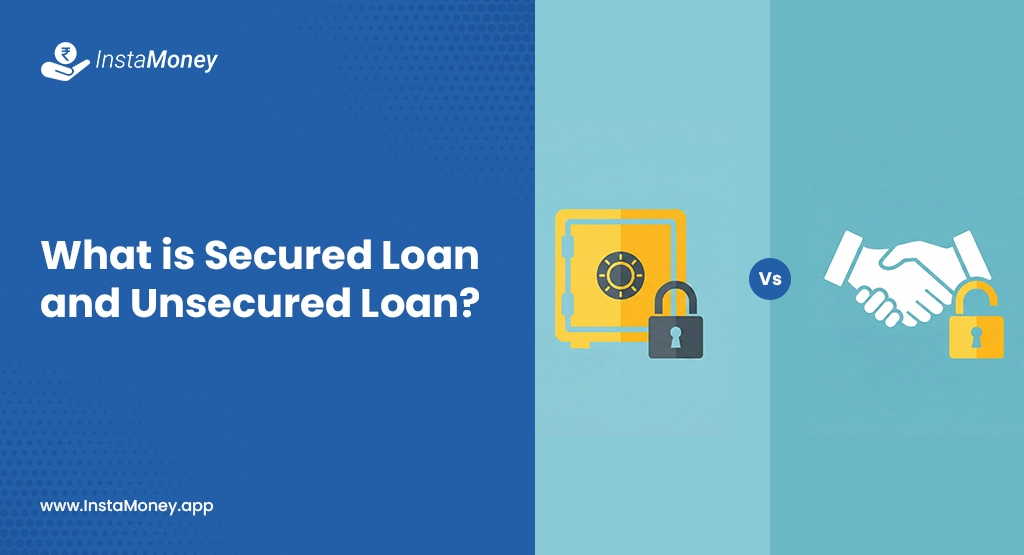
A secured loan requires collateral such as a home, car, gold, or investments. The lender can seize this asset if you default on payments. Because lenders take less risk, secured loans typically offer lower interest rates, higher borrowing limits, and longer repayment periods compared to unsecured loans.
What Types of Assets Can Be Used as Collateral?
You can use almost anything valuable as collateral while applying for a secured loan, as long as the lender accepts it and you own it outright. Common examples include:
- Real estate: Your home, apartment, or commercial property
- Vehicles: Cars, motorcycles, boats, or commercial vehicles
- Precious metals: Gold jewelry, coins, or bars
- Savings and deposits: Cash in savings accounts or fixed deposit certificates
- Investments: Stocks, mutual funds, or bonds
- Other valuables: Fine art, jewelry, or equipment with proven market value
The amount you can borrow usually depends on the value of your collateral. If you pledge a house worth Rs. 50 lakh, you might be able to borrow up to 70-80% of that value.
What Are Common Examples of Secured Loans?
Several types of secured loans are widely available in India and worldwide. You’ve likely heard of most of them:
Mortgages: A mortgage is a secured loan where your home serves as collateral. You borrow money to buy property, and the lender holds a claim against your house until you pay back the full amount. Most mortgages have repayment periods of 15 to 30 years.
Home equity loans: If you already own a home with paid-off value, you can borrow against that equity. A home equity loan lets you access funds using your home’s current value minus what you still owe on it. This is sometimes called a second mortgage because it’s a second loan on the same property.
Auto loans: When you finance a car purchase, the vehicle becomes the collateral. If you stop making payments, the lender can repossess the car. Auto loan terms typically range from 3 to 7 years.
Loans against gold: You can borrow against gold jewelry or bars you own. These loans come with quick approval times and are popular in India because of high gold ownership.
Loans against securities: If you own stocks or mutual funds, you can borrow against them while keeping ownership of the investments. You continue to receive dividends while repaying the loan.
Loans against fixed deposits: You can take a loan using your bank’s fixed deposit as security. The bank holds your FD and releases it once you repay the loan.
Business loans: Small business owners can secure loans using property, equipment, or inventory as collateral.
When to Choose a Secured Loan?
A secured loan is your best option when:
- You own valuable assets (home, vehicle, investments)
- You’re borrowing a large amount (Rs. 10 lakh or more)
- You want the lowest possible interest rates
- You can wait 2-3 weeks for approval
- Your credit score is below 700
- You want to stretch out repayment over many years to reduce monthly payments
- You’re willing to accept the risk of losing your collateral in exchange for lower costs
Example: You need Rs. 15 lakh to expand your business. You own a home worth Rs. 75 lakh with Rs. 50 lakh equity remaining. A home equity loan at 8% interest makes sense over a personal loan at 16% interest.
How to Apply for a Secured Loan in India?
The process varies slightly by lender, but below are the most common steps you may need to go through while applying for a secured loan:
Step 1: Decide what asset you’ll pledge. Get it valued (property appraisal for homes, market value for vehicles or gold, current value for securities).
Step 2: Gather documents like identity proof, address proof, income proof, property documents, and bank statements. Check the lender’s minimum requirements.
Step 3: Banks, NBFCs, and financial institutions all offer secured loans. Compare interest rates, processing fees, prepayment penalties, and tenure options.
Step 4: Submit your application with required documents. Many lenders let you apply online, submit documents digitally, and track progress on your phone.
Step 5: The lender arranges inspection and valuation of your collateral. You may need to pay for this, or the lender may cover it.
Step 6: The lender verifies all documents and approves your loan. This takes 7-21 days typically.
Step 7: You sign the loan agreement and collateral pledge documents. This creates a legal claim on your asset.
Step 8: After final verification, the loan amount is transferred to your account.
What Is an Unsecured Loan?
An unsecured loan requires no collateral and is approved based on creditworthiness and income. Lenders cannot seize assets if you default but may pursue legal action or debt collection.
Common examples include personal loans, credit cards, and student loans. These loans typically have higher interest rates and lower borrowing limits than secured loans.
What Factors Do Lenders Consider for Unsecured Loans?
When you apply for an unsecured personal loan, lenders evaluate several key factors to decide whether to lend you money and at what interest rate:
- Credit score: Your credit score is the biggest factor. Banks use this three-digit number to assess your borrowing history. A higher credit score signals that you repay your debts on time. Most lenders prefer credit scores of 700 or higher for favorable unsecured loan terms.
- Income and employment: Lenders want proof that you earn enough to repay the loan. They review your salary, job stability, and how long you’ve worked in your current role. Self-employed people face stricter scrutiny because their income can be variable.
- Debt-to-income ratio: This ratio shows what percentage of your monthly income goes toward existing debts. If you already owe a lot, lenders may think you can’t handle another loan payment.
- Payment history: Your track record with previous loans and credit cards matters. If you’ve missed payments before, lenders see you as riskier and may charge higher rates or deny your application.
- Employment history and stability: Lenders prefer applicants who’ve held their job for at least 2 years. Frequent job changes can make you seem like a risky borrower.
- Bank account and savings: Having money in the bank shows you’re financially stable and prepared for emergencies. Some lenders ask to see 3-6 months of bank statements.
What Are Common Types of Unsecured Loans?
Unsecured loans come in several varieties, each designed for different financial needs:
Personal loans: These multipurpose loans can be used for anything such as, medical emergencies, weddings, home renovations, vacation, or debt consolidation. Most personal loans have fixed monthly payments over a set period, typically 2 to 7 years.
Credit cards: A credit card is a revolving unsecured loan. You get a credit limit and can borrow up to that amount, repay it, and borrow again. You only pay interest on what you actually use.
Student loans: These loans help pay for education costs. Both government and private lenders offer personal loan for students with various repayment options.
Lines of credit: Similar to credit cards, a line of credit gives you access to a set amount of money that you can draw from as needed. Interest is charged only on the amount you actually borrow.
Short-term loans: Quick personal loans that bridge the gap until your next paycheck. These have higher interest rates and shorter repayment periods (usually 1-3 months).
Business loans: Small businesses can access unsecured business loans based on their business performance, cash flow, and credit history rather than personal assets.
When to Choose an Unsecured Loan?
An unsecured loan is your best option when:
- You need money within days, not weeks
- You don’t want to risk any assets
- You’re borrowing a smaller amount (Rs. 5-10 lakh)
- Your credit score is above 700
- Your income is stable and your employment is secure
- You need the flexibility to use money for any purpose
- You value simplicity and minimal documentation
Example: You face a Rs. 1 lakh unexpected medical expense and need the money in 2 days. An instant loan that deposit money to your account overnight makes more sense than waiting 3 weeks for a secured loan approval.
How to Apply for an Unsecured Loan in India?
Unsecured loan applications are much simpler:
Step 1: Check eligibility. You typically need a minimum age of 21, stable income (salaried or self-employed), and a decent credit score (600+ for approval, 700+ for better rates).
Step 2: Gather documents such as, Identity proof, address proof, income proof (salary slips or ITR), bank statements (last 6 months), and PAN card. That’s usually all you need.
Step 3: Different lenders offer different rates and terms. Check multiple options before applying.
Step 4: Most unsecured lenders accept online applications. Enter your details, upload documents, and submit.
Step 5: The lender checks your credit score with credit agencies, verifies your bank account, and confirms your income. This happens in minutes or hours.
Step 6: You get approval or rejection notification within 24-48 hours typically.
Step 7: Once approved, you electronically sign the loan agreement. No need to visit a branch.
Step 8: The loan amount is transferred to your bank account within a few hours or the next business day.
Secured Loan Vs Unsecured Loan: Key Differences
Understanding the main differences helps you choose the right loan for your situation. Here’s a detailed comparison:
| Factor | Secured Loan | Unsecured Loan |
| Collateral Required | Yes, you must pledge an asset | No collateral needed |
| Interest Rates | Lower (typically 6-12% annual) | Higher (typically 10-24% annual) |
| Loan Amount | Higher limits (can borrow 70-90% of collateral value) | Lower limits (typically up to Rs. 50 lakh) |
| Approval Speed | Slower due to asset verification | Quick, sometimes same-day approval |
| Credit Score Needed | More flexible (650+ acceptable) | Stricter requirement (700+ preferred) |
| Repayment Period | Longer tenure (5-30 years possible) | Shorter tenure (2-7 years typical) |
| Risk to You | Asset can be seized if you default | No asset loss, but credit score damage |
| Processing Time | 7-21 days (property appraisal takes time) | 1-3 days (minimal documentation) |
| Purpose Restrictions | May have specific use requirements | Generally flexible use allowed |
Conclusion
In brief, both secured loan and unsecured loan serve different purposes. Secured loans finance big purchases like homes and vehicles. Unsecured loans handle emergencies, personal needs, and everyday expenses.
Evaluate your situation, compare rates from multiple lenders, and use an EMI calculator to see the real cost. Make your decision based on your timeline, assets, creditworthiness, and what you can afford to repay monthly.
Don’t rush in making the choice. The difference between a secured and unsecured loan can cost you thousands of rupees over the loan’s lifetime.
Take time to understand which option truly fits your financial goals and risk tolerance.