

Table of Contents
ToggleWhat is Loan Recovery and Why Does it Happen?
1. Irregular Income:
Freelancers, self-employed individuals, and people with variable earnings may experience difficulties maintaining consistent payment schedules.
2. Unexpected Expenses:
Medical emergencies, urgent repairs, or family responsibilities can affect the money available for loan repayment.
3. Poor Financial Planning:
Taking on multiple credit commitments without accounting for monthly expenses can make EMIs difficult to manage.
4. Missed Payment Reminders:
Forgetting a due date or having insufficient funds in a linked bank account can result in delayed payments.
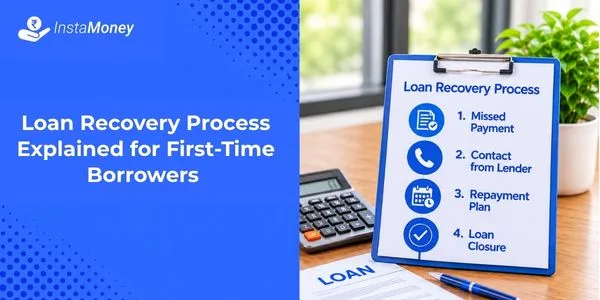
How Does the Loan Recovery Process Work?
1. Payment Reminders and Notifications
When a borrower misses an EMI, the lender may send reminders through SMS, email, phone calls, or its official application. These communications usually mention the outstanding amount and payment deadline.
2. Follow-ups From the Lender
If the payment remains overdue, the lender may contact the borrower to understand the reason for the delay and request repayment. Borrowers should respond to these communications rather than avoid them, as early communication may help clarify available options.
3. Involvement of Authorised Recovery Agents
In certain cases, lenders may appoint authorised recovery agents to communicate with borrowers and collect outstanding dues. These representatives must follow applicable regulatory requirements, and the lender remains responsible for their conduct.
4. Further Recovery or Legal Action
If outstanding dues remain unpaid despite repeated communication, the lender may consider further recovery measures in accordance with the loan agreement and applicable laws. The nature of these measures depends on the type of credit facility and individual circumstances.
What are Your Rights During Loan Recovery?
1. Protection Against Harassment
Recovery agents must not use physical or verbal intimidation, abusive language, or threatening behaviour.
2. Reasonable Communication Hours
Under applicable RBI instructions, lenders and their recovery agents must not make recovery calls before 8 a.m. or after 7 p.m.
3. Respect for Privacy
Agents cannot publicly humiliate borrowers or intrude upon the privacy of their family members, friends, and referees.
4. Accurate Information:
Borrowers must not be misled about outstanding dues or the consequences of delayed payments.
5. Grievance Redressal:
Borrowers can raise complaints with the lender if recovery agents engage in inappropriate conduct.
How Can You Manage Loan Recovery and Avoid Further Payment Difficulties?
1. Review Your Outstanding Loan Amount
Check your loan statement to understand the principal outstanding, unpaid EMIs, applicable interest, and any additional charges. Knowing the exact amount helps you plan your next steps and avoid confusion during recovery-related discussions.
2. Contact Your Lender Early
If you anticipate missing a payment, inform your lender before the due date. Explain your financial situation and ask whether any repayment-related options are available under its policies.
3. Prioritise Essential Payments
Assess your monthly income and expenses to figure out how much you can comfortably set aside for outstanding EMIs. Prioritise essential expenses while making a realistic repayment plan.
4. Avoid Taking Unplanned Credit
Using another loan to clear existing dues without evaluating the total cost can increase your financial burden. Consider the interest rate, processing fees, and repayment schedule before taking on additional credit.
5. Maintain Payment Records
Keep receipts, bank statements, and transaction confirmations for every payment. These records can help resolve disputes if a payment is not reflected correctly in your loan account.
How Can InstaMoney Support Your Borrowing Journey?
InstaMoney offers a completely digital borrowing experience by connecting individuals with RBI-regulated lending partners. Its key features include:
Simple Application:
Register on the app, select your preferred loan amount and repayment tenure, and submit the required documents, including Aadhaar and PAN.
Digital Loan Process:
Complete the application online and submit it for the digital loan process review by the lending partner.
Direct Disbursal:
Once approved, the loan amount is transferred to the borrower’s bank account.
Application Tracking:
Track your loan application status through the app.
Informed Borrowing:
Review the applicable interest rate, charges, and repayment schedule before accepting a loan offer.
InstaMoney operates as a Loan Service Provider (LSP), connecting borrowers with regulated lending partners. It is not the lender itself, so borrowers should verify the lending partner and loan agreement to be an RBI-approved app.